What you will learn
In this online Allergen and Anaphylaxis Management for Schools training, you’ll learn how to create a safe environment for pupils with allergies and respond confidently if an emergency arises.
By the end of the course you will be able to:
- Understand what food allergies are and how they differ from food intolerances
- Identify the 14 major food allergens and where they’re commonly found
- Recognise non-food allergens such as latex, insect venom, pollen and animal dander
- Recognise allergy risks and the signs of an allergic reaction, including anaphylaxis
- Respond appropriately and confidently to an allergic emergency
- Understand the safe use of adrenaline auto-injectors (AAIs)
- Understand your duty of care and responsibilities under Benedict’s Law
- Describe the purpose of an Individual Healthcare Plan (IHP) and an Allergy Action Plan (AAP)
- Identify the role of the school’s Allergy Lead
- Contribute to a safe, allergy-aware school environment
Modules
Your Title Goes Here
What will you learn on this course?
This course gives school staff a practical understanding of allergens and how to manage them safely in school. By the end of the course, you will:
- Understand what food allergies are and how they differ from food intolerances
- Recognise allergy risks and the signs of an allergic reaction, including anaphylaxis
- Know how to respond appropriately to an allergic emergency
- Understand how to use adrenaline auto-injectors (AAIs) safely
- Understand your responsibilities in supporting pupils with allergies
- Be able to help create a safe and allergy-aware school environment
Module 1 - Overview and Tips
This first module sets out what you will learn and how to get the most from the course. It introduces the learning outcomes, explains how to move through the course and save your progress, and covers the accessibility features available as you work through each lesson.
Module 2 - Understanding Allergies and Risks within Schools
Here we look at why allergy awareness is so important in schools, and introduce Benedict’s Law and what it asks of schools. You will learn the difference between a food allergy and a food intolerance, how allergic reactions develop, and how to identify the 14 major food allergens, as well as what can happen when allergies are not managed properly.
Module 3 - Responding to Allergic Emergencies and Using Auto-Injectors
Anaphylaxis can come on very quickly, and a calm, confident response from staff saves lives. This module helps you recognise the ABC symptoms of anaphylaxis, walks step by step through responding to a suspected reaction (including giving an adrenaline auto-injector and calling 999), and shows how different AAIs, such as EpiPen and Jext, are used safely.
Module 4 - Roles and Responsibilities in School Allergy Management
Allergy safety is a shared responsibility and part of safeguarding and health and safety. This module explains the purpose of a school allergy policy, the role of the Allergy Lead, and how Individual Healthcare Plans (IHPs) support pupils with allergies day to day and in an emergency.
Module 5 - Final Assessment
You will put everything you have learned into practice with a short assessment based on realistic school scenarios. The pass mark is 80%, and if you do not pass first time you can retake the assessment as many times as you need.
Downloads and Useful Materials
Includes a downloadable ’14 allergens’ poster and further resources you can use and display around your school.
Meet One of Our Safeguarding Training Experts
Her experience in education has given her expert understanding of safeguarding practices and a commitment to ensuring the safety and well-being of pupils. Her specialist knowledge, gained through hands-on experience, enables her to write high-quality content and deliver outstanding training that is learner-focused and informed by practical case studies.

Who is this course for?
- Teachers
- Teaching assistants
- Catering and kitchen staff
- Administration and office staff
- Governors
- Caretakers and facilities staff
- Headteachers and school leaders
- Lunchtime supervisors
- After-school club staff
Certification
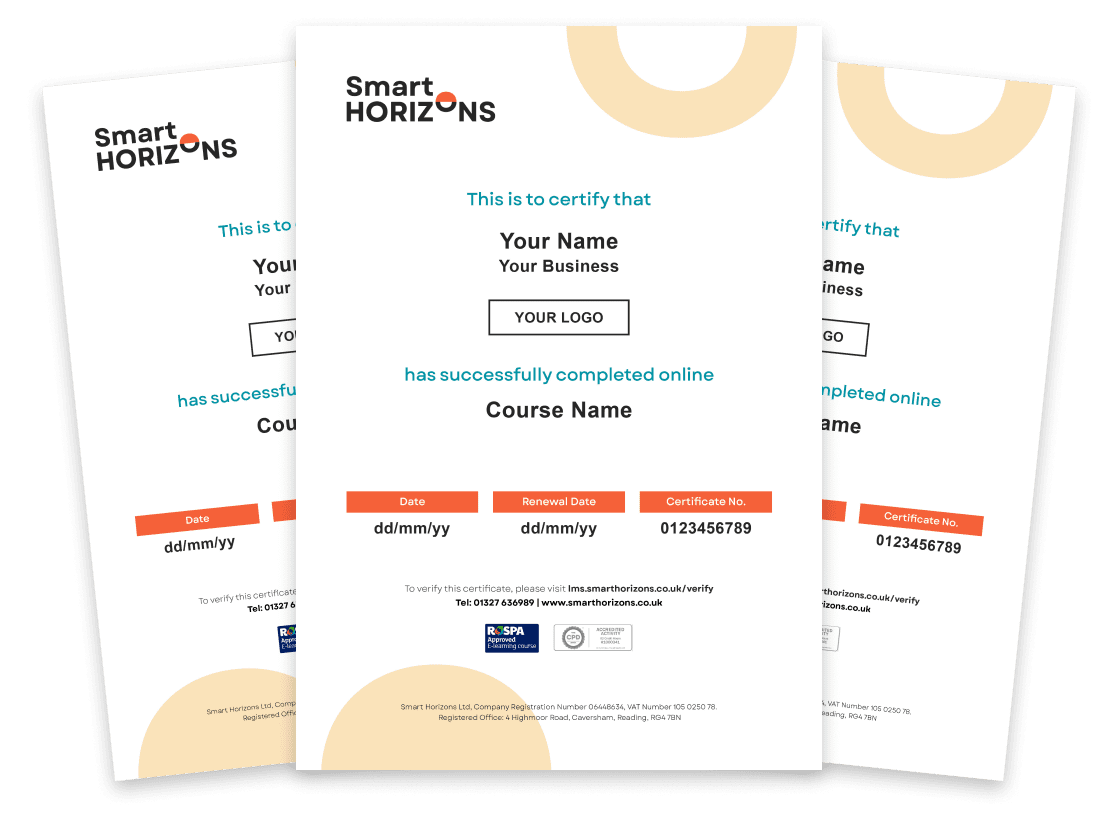
Upon successful completion of this online course, with an 80% pass mark in the final assessment, you’ll be sent a personalised digital certificate by email.
You can access a copy, reprint or download this certificate on our LMS (Learning Management System). This is your proof that you have completed the training and understand your school’s allergy management responsibilities.
Downloads
This course includes two free downloadable resources you can use in your school:
- A food allergens poster
- An allergy information sign (A4, landscape)
Genuine reviews
Frequently Asked Questions
Your Title Goes Here
Does this course cover Benedict's Law?
Yes. This course explains what Benedict’s Law requires of schools, including allergy policies, spare adrenaline auto-injectors, whole-staff training, incident reporting, and Individual Healthcare Plans.
Is this course suitable for catering staff as well as teachers?
Yes. Allergy safety is a whole-school responsibility, and this course is designed for all staff who may come into contact with pupils, including catering, admin, and facilities staff, not just teaching staff.
How long does the course take to complete?
The course takes around 20 to 30 minutes to complete. You can take breaks and finish it at a time that suits you, and your progress is saved automatically if you need to return later.
What happens if I don't pass the final assessment?
You can retake the assessment as many times as you need, free of charge, until you pass. You’ll need to score 80% to receive your certificate.
Is this course suitable for staff who don't work directly with pupils, like admin or facilities teams?
Yes. Allergy safety is a whole-school responsibility, not just a teaching one. This course is designed for anyone working in a school setting who may need to recognise a reaction or respond in an emergency.
Need help?
Call us on 01327 636989
Email us via hello@smarthorizons.co.uk
Or fill out this quick form and we'll get back to you: