What you will learn
In this online Safeguarding in Early Years course, you’ll understand your legal obligations and learn the steps and actions to take to carry out your safeguarding duties.
By the end of the course you will be able to:
- Understand government guidance and legislation for safeguarding.
- Recognise various indicators of abuse.
- Maintain a child-centric approach in your work.
- Appreciate how personal values can influence perceptions of abuse.
- Identify susceptibilities leading to radicalisation.
- Protect children in online environments.
- Handle allegations, complaints and safeguarding disclosures properly.
- Take appropriate actions when suspecting abuse.
Modules
Your Title Goes Here
1. Overview and Tips
This module introduces the course, its learning outcomes and how to work through the training at your own pace. It also explains the available accessibility tools and how to pause and resume your progress.
2. September 2026 Safeguarding Guidance
This module summarises the September 2026 amendments to the EYFS statutory framework and what they mean for early years settings. It covers safer sleep, enhanced DBS checks for volunteers, Ofsted or childminder-agency notifications, children’s screen use and keeping children safe on outings.
3. Core Principles of Safeguarding
This module explains safeguarding and child protection, including significant harm and factors that can increase a child’s vulnerability. It outlines the responsibilities of the Safeguarding Lead and the legislation and guidance relevant across England, Scotland, Wales and Northern Ireland.
4. Creating a Safe Environment
This module uses Finkelhor’s Four Factor Model to explore how early years settings can reduce safeguarding risks through appropriate conduct, effective policies and suitable risk assessments. It also covers positions of trust, safer eating and sleeping, child-centred practice and staff wellbeing.
5. Recognising Abuse
This module covers contextual safeguarding, the four categories of abuse and neglect and indicators of physical abuse. It also introduces child exploitation, fabricated or induced illness, FGM, honour-based abuse and faith abuse.
6. Responding to Concerns
This module looks at the ways children may disclose abuse and the barriers that can prevent them from speaking out. It explains how to listen, respond appropriately and avoid actions that could compromise the safeguarding process.
7. Reporting and Recording Concerns
This module explains when, how and to whom safeguarding concerns should be reported and accurately recorded. It covers levels of need, early help, statutory intervention, low-level concerns and multi-agency arrangements, including MASH where applicable.
8. Online Safety and Safeguarding
This module introduces online safeguarding and the digital risks that may affect young children at home or in an early years setting. It considers how practitioners can recognise concerns and help create safer online experiences.
9. Radicalisation and Extremism
This module explains the Prevent duty and the responsibilities of early years practitioners in relation to radicalisation and extremism. It covers relevant agencies, safeguarding procedures and signs that a child may be at risk.
10. Safeguarding in Practice
This module uses case studies to help you apply safeguarding knowledge to realistic situations. It reinforces how to identify poor practice, recognise possible abuse and decide what action to take.
11. Final Assessment
The final assessment contains 12 questions selected from the course question bank. You need a score of at least 80% to pass, and you can retake the assessment if required.
12. Downloads
This module provides practical resources to keep after the course, including a body map template. It also signposts inspection handbooks and safeguarding information for England, Scotland, Wales and Northern Ireland.
13. Post Course Evaluation
The course ends with a short evaluation questionnaire. Your feedback helps improve the training and future learner experience.
Who is this course for?
- Nursery staff
- Pre-school staff
- Early years teachers and support staff
- Playgroup and creche workers
This online Safeguarding in Early Years course is designed for any person who works or comes into contact with children within an early years setting.
Certification
This online Safeguarding in Early Years training is accredited by The CPD Group.
Score 80% or more in the final assessment to receive your certificate, which is valid for 2 years.
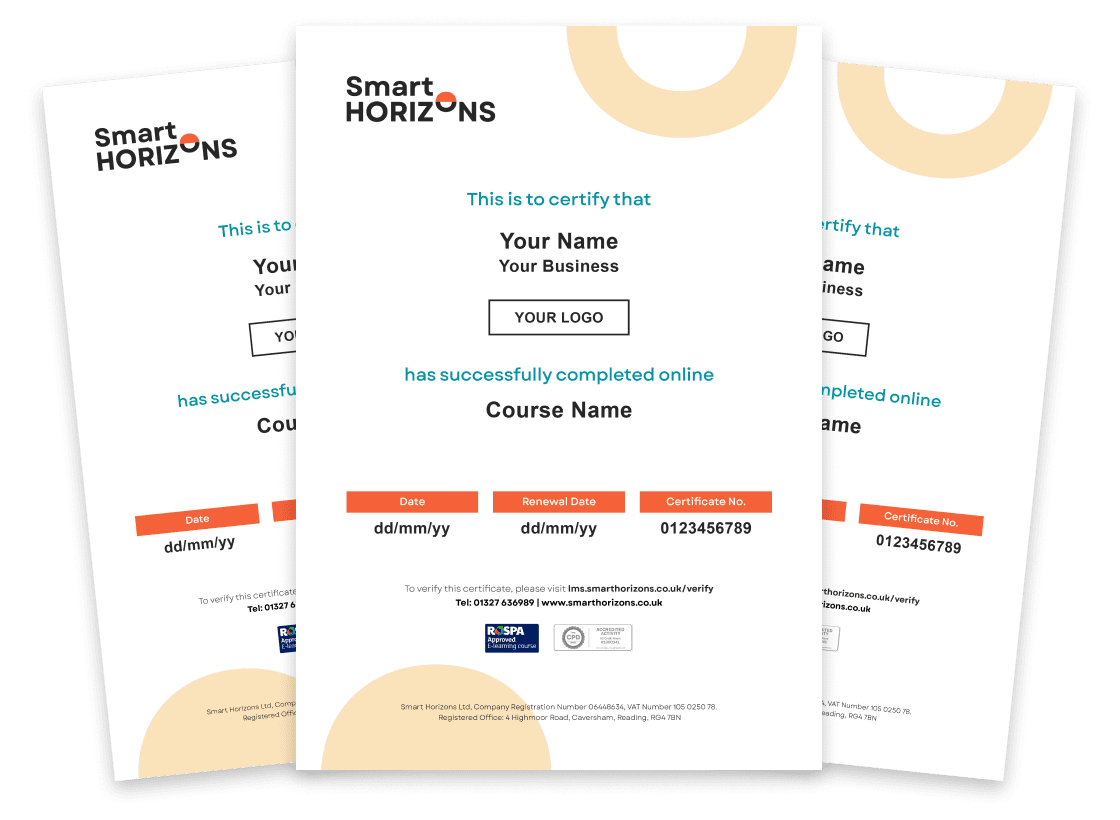
Upon successful completion of this online course, you’ll be sent a personalised digital certificate as a PDF, enabling you to download and print it.
You can access a copy, reprint or download this certificate on our LMS (Learning Management System). This is your proof that you have been trained in safeguarding best practices and achieved compliance. The certificates include a verification number so anybody can authenticate the certificate’s legitimacy.
Your certificate is valid for 2 years. If you work with children under the age of five, including in early years settings and as a childminder or nanny, renewing your safeguarding training every two years is a legal requirement, not just good practice. We will remind you when your training is due for renewal.

Genuine reviews
Frequently Asked Questions
Your Title Goes Here
What's the difference between the online Safeguarding in Education course and the online Safeguarding in Early Years course?
The online Safeguarding in Early Years course is tailored for individuals working in the early years sector, with scenarios and information specific to that setting. If you’re teaching in a primary or secondary school environment, we recommend our online Safeguarding in Education course.
When do we have to refresh our safeguarding training if we work in early years education?
Your certificate is valid for 2 years. If you work with children under five, renewing your safeguarding training every two years is a legal requirement. We update the online Safeguarding in Early Years course regularly to reflect changes in legislation and guidance, including the EYFS, so when you renew you take the current version of the full course and pass the final assessment to receive your new certificate.